LLYWERNOG MINE
Known locally as Gwaith Poole. (Poole’s Minework), the original discovery of the mineral vein was made around the year 1742, during the reign of George III. The names of the original prospectors
One tunnel struck the ‘Main Lode’ of silver-lead ore (technically known as(‘Argentiferous Galena’) at a depth of 17m below the surface outcrop and a productive period of activity began. The other adit, driven further to the east was a
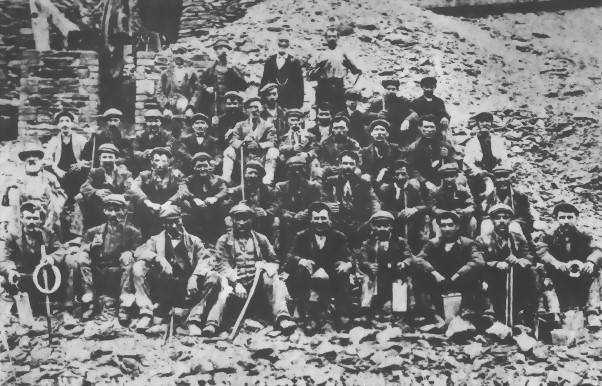
William Poole (of ‘Gwaith Poole’ fame) held the mining lease to the Llywernog minerals between 1807 and 1810. This was midway between the Battles of Trafalgar and Waterloo, at the most difficult period of the Napoleonic Wars. Poole’s mine was an outstanding success, employing 60 miners and making considerable profits with the high price of lead ore (£19 a ton). The main shaft, sunk vertically from the surface between 1810 and 1873, eventually reached a depth of 132mn (432ft or 72 fathoms).

Between 1824 and 1834, Llywernog Mine was leased (along with many others in the district) to Cornish ‘Mine Adventurers’, the Williams family of Scorrier House, Gwennap, near Redruth in Cornwall. This was the start of a long association between the Mining Districts of Cardiganshire and Cornwall which was to continue until the 1900s.
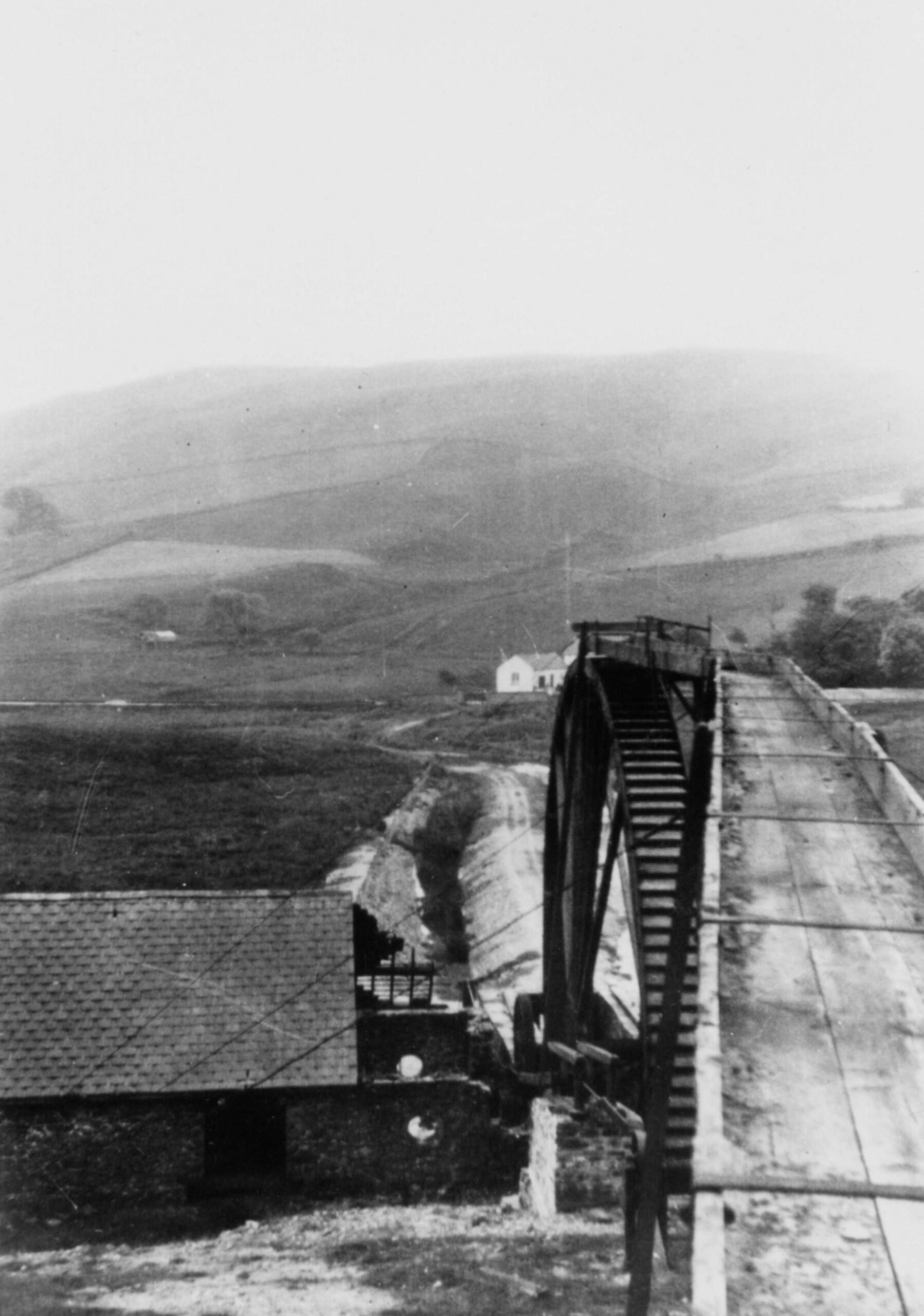
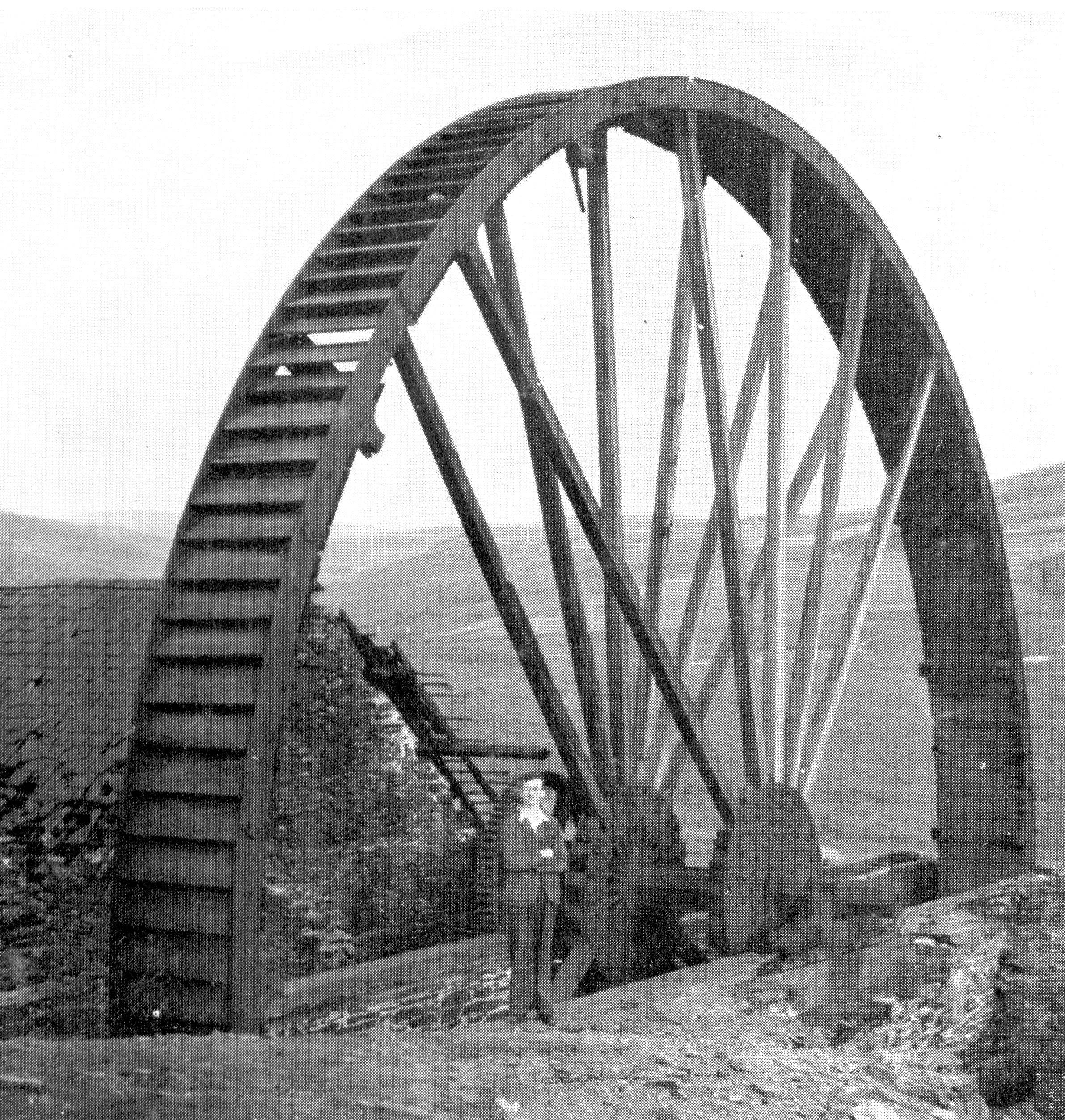
At Llywernog, mine, adventurers came and went, as the shaft grew ever deeper. Robert Dunkin of Llanelli, a lead smelter in 1840, Joseph Holdsworth of Leicestershire in 1852 and then a series of mining companies, floated on the London Stock Exchange, such as Llywernog Mining Company Ltd of 1868. With depth, the mineral vein became increasingly unproductive and pumping costs grew in proportion. In 1869, in addition to the 40ft diameter waterwheel, the company installed a 16 h.p. steam engine to assist with the pumps when surface water supplies were short. Around 1874, a giant 50ft diameter overshot waterwheel was
The great wheel, clearly visible from the main road to Aberystwyth, became a sad symbol of a once mighty industry. By the 1880’s huge new mines were being opened up all over the world at places like Broken Hill in Australia and Leadville in Colorado, and the silver-lead ore marked crashed. In Cardiganshire, mines closed and whole communities emptied of people as they left to seek work in mines overseas or digging for ‘Black Gold’ in the valleys of
In the 1900s Llywernog Mine saw a
During 1973, the old mine was awoken from its slumbers and began life as a mining museum, privately developed by Peter Lloyd Harvey, and his father, the late Dr Stephen Harvey of the University of Leicester. Now, the mine is still evolving and the traditions of the old mining district live on for future generations.
For more history of Llywernog Mine, see The Mines Of LLywernog
This is a lengthy article on the history of Llywernog
Spirit Of The Miners has
See Wales Underground for information on mining geology, history and archaeology in Wales.

PICTURE GALLERY